The dance-performative research project Exquisite Corpse is part of a series of projects by young (though not necessarily) authors produced by Emanat that explore stage language. The aim of these explorations is to break the concentration of creative processes that focus exclusively on the product and redirect them towards the development of performing language and a reflection on the issues of WHAT and HOW in relation to artistic creation. In collaboration with Cankarjev dom, a public presentation will be performed using freely the surrealist play principle of the “cadavre exquis” (the exquisite corpse) to reflect on the structure of the presentation, the development of the performative language or the working methodology developed through the research process. Neža Ana Goričar and Maja Vidic will present their movement research. The presentations will be followed by a conversation between the authors and Maša Radi Buh.
Production: Emanat Institute
Co-organisation: Cankarjev dom
Financial support: Ministry of Culture RS
____________________
The author begins this research out of frustration. Frustration with the endless search for reasons. With the need we have, as viewers, to constantly explain, contextualize, and justify what lies before us; to make sense of it, right there and then, before we’ve even processed it. And this response is most raw when a naked body stands before us. She will explore nudity as a performative tool: how it influences the gaze directed at it, and how it challenges the social norms that condemn it. The main tools of her research will be duration and circularity as instruments of the desexualization of the naked body. Imagine a naked body on a rotating platform: there is no perspective that remains unseen, no angle that can be hidden. It is impossible to frame the body in a specific way, because the rotation reveals absolutely everything. And so the naked body slowly becomes nothing more than a mass of muscle and skin. Through the observer’s perspective, she will explore the tension between intimacy and voyeurism, between vulnerability and power, between curiosity and shame. Above all, it will be about defying justification and rationalization; resisting explanation and logic; a simple WHY NOT?
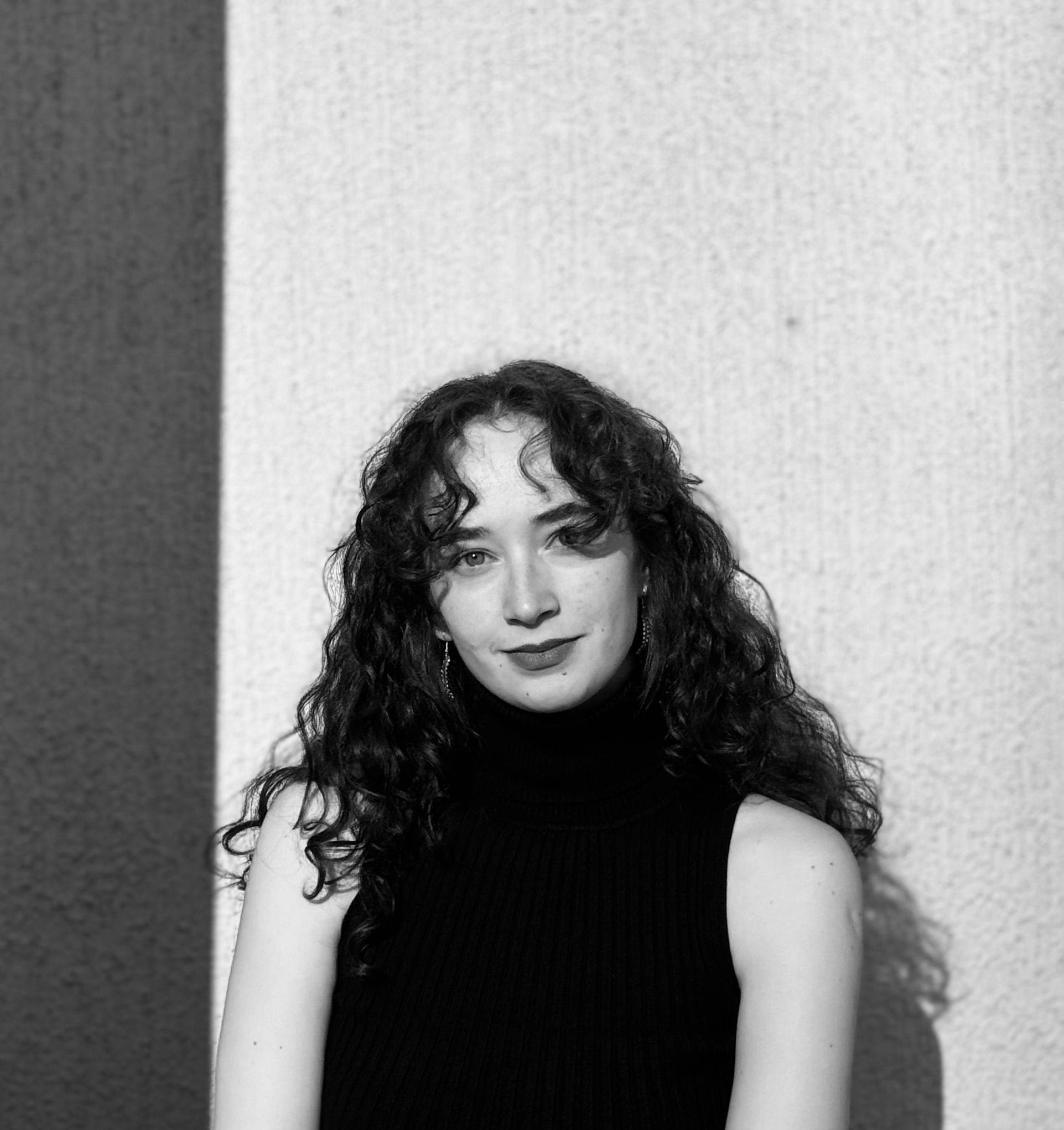
Neža Ana Goričar (2003) is an artist working in the fields of contemporary dance and performance. After graduating from the Secondary Ballet School in Ljubljana, she decided to study contemporary dance at ArtEZ University of the Arts in Arnhem, the Netherlands, where she will graduate this July. During her studies, she has collaborated with many internationally renowned choreographers, including Anouk van Dijk, Julio Cesar Iglesias Ungo, and Maciej Kuzminski. As a choreographer, she created the solo piece “Lesson no.1” in 2022, which was selected as part of ArtEZ’s annual “Dance Artist Presents” performance and presented alongside works by renowned choreographers such as Ann van den Broek and Mercedes Pedroche. A year later, the site-responsive duet Choo Choo Blue Shoe followed, which she created and performed together with Swedish dancer Olle Arrhenius in the sculpture garden of the Arnhem Museum. Neža was part of the TANZ_KASSEL dance ensemble in Germany last season and is currently collaborating with the interdisciplinary production house KASKO in the Netherlands. As an artist, she is constantly fascinated by the absurdity of everyday life and its parallels with performance. What do we perceive as normal or acceptable—and how do these norms in everyday life differ from those on stage? This is one of the questions currently inspiring her artistic practice.
Movement research, performance: Neža Ana Goričar
Mentoring:
Lighting design: Veronika Hana Grubič
____________________
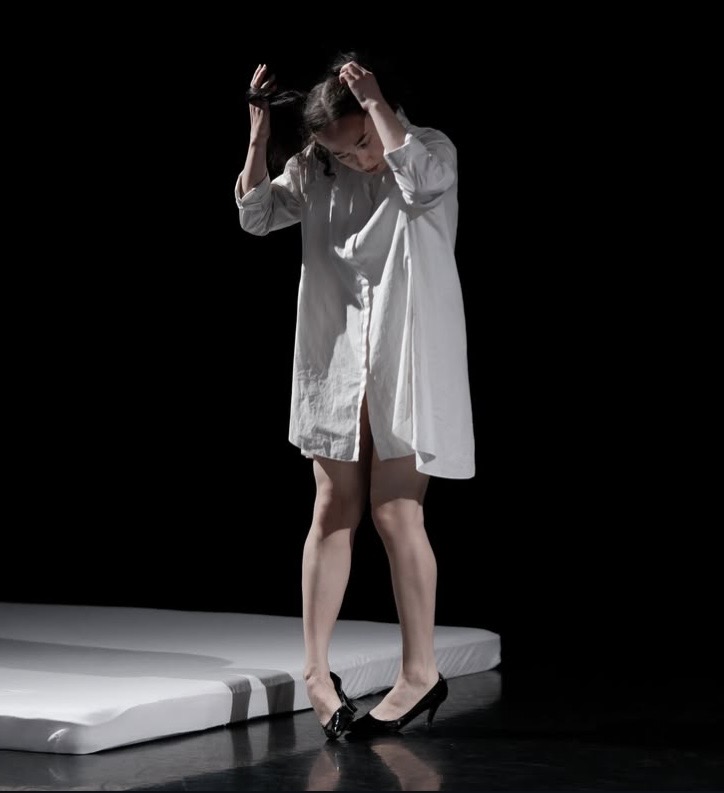
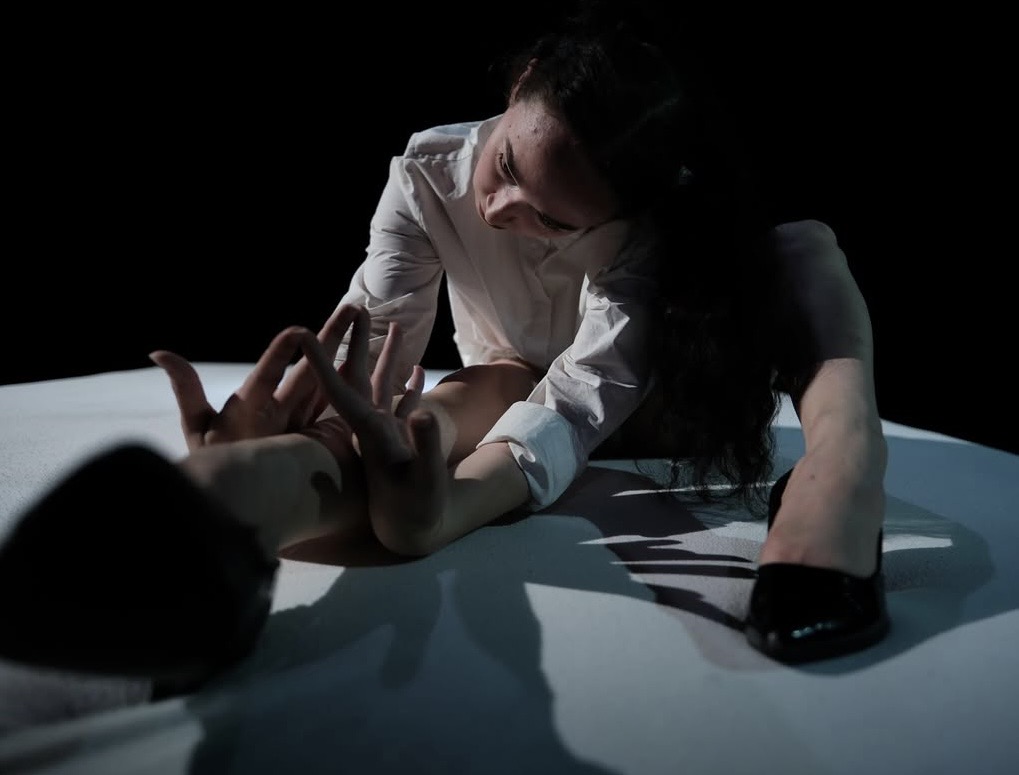
This movement-based research is based on an exploration of the character Daisy Hell, whom the author creates and shapes throughout the process. She constructs Daisy’s identity on the basis of defined character traits, inner motivations, psychological factors and impulses, which are reflected in her physical expression. She is interested in the character’s story, which reveals its multi-layered meaning through symbol-laden gestures and the relentless liminal space of her own room. Every internal or external stimulus triggers a physical reaction, a response in the form of a fragmented emphasis on individual parts of the body and limbs. The research focuses on unpredictability and an in-depth analysis of the varying intensities of this emphasis, its resonance or impulse as a concluding action. In this context, the elevation and depression of movement play a significant role, emphasising the contrast between abrupt, constrained movement and the intimacy of the gentle, soft dynamics as the body settles. In her research, the author engages with the concept of society’s devotion to innocence, whereby the obsession with achieving an impossible balance between the body of an ‘innocent young girl’ and that of a ‘fully grown woman’ distorts, distorts and exposes Daisy’s female body, whilst she uncertainly strives to claim autonomy over her own body.
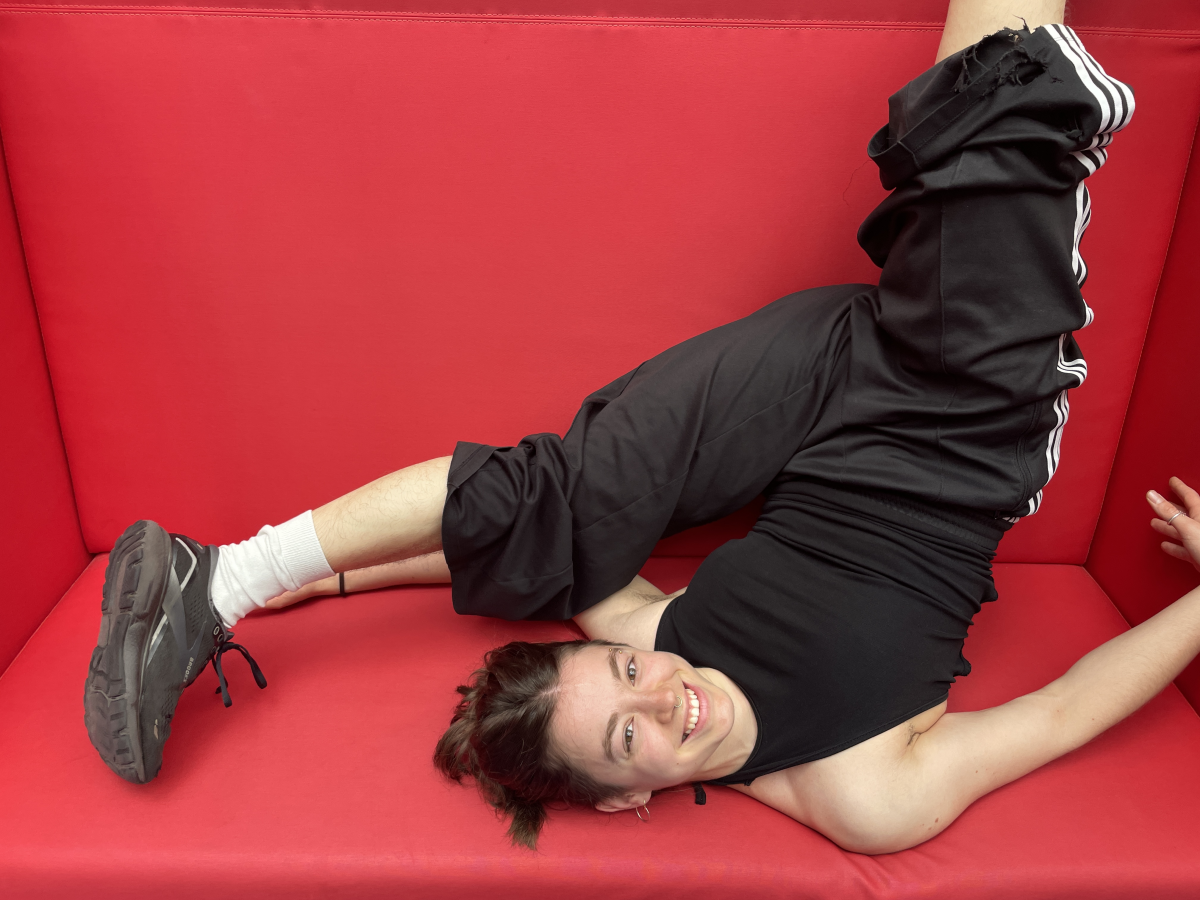
Maja Vidic (2001) is a dancer, choreographer, performer and musician. After studying contemporary dance at the Secondary School of Education, the Grammar School and the Art Grammar School in Ljubljana, she continued her studies at the Fontys Dance Academy (NL) and at the Institute for Dance Art (IDA) at Anton Bruckner University in Austria. Her original solo piece Three Daughters, Two Mothers and One Grandmother (2024) won the award for best choreography and the production award at the OPUS 1 international festival for young dance creators. The work was performed in Prague, Linz and Eisenstadt, where, as part of an artist-in-residence programme, she was a guest at the Burgenland Choreography Centre and took part in the Dance Identity festival. In 2025, as part of the production award from JSKD and the Intakt Dance Studio, she created the vocal-dance performance Psiček nima repa več (a duet in collaboration with Neža Kokalj). In Linz, she also presented the group choreography 3H2M1B and began her research project Daisy Hell.
Movement research, performance: Maja Vidic
Lighting design: Veronika Hana Grubič
PHOTO